
Roadtrip Diary: The Trip in Numbers
Posted by James & Myke Savage, on Jan 25, 2025.
Why we did it
Folks have asked why we drove over 6,000 miles, from California to Alabama to Ohio and back to California, over the December holidays. The short answer is: 🐕. We couldn’t bear to leave Chelsea at some strange kennel, especially over the holidays. And unfortunately, because of the changes to the TSA rules, where emotional support animals are no longer allowed on commercial flights unless they’re tiny enough to fit under the seat, flying was no longer an option, (and we can’t afford to fly private).
In addition to that, it was a fun experiment to see what it would be like to take an electric vehicle across the country and back. James was a little nervous that during a natural disaster (or zombie apocalypse) that gas would be more practical than charging an EV. We both also love driving the Rivian with all of its fancy tech and comfortable ride.
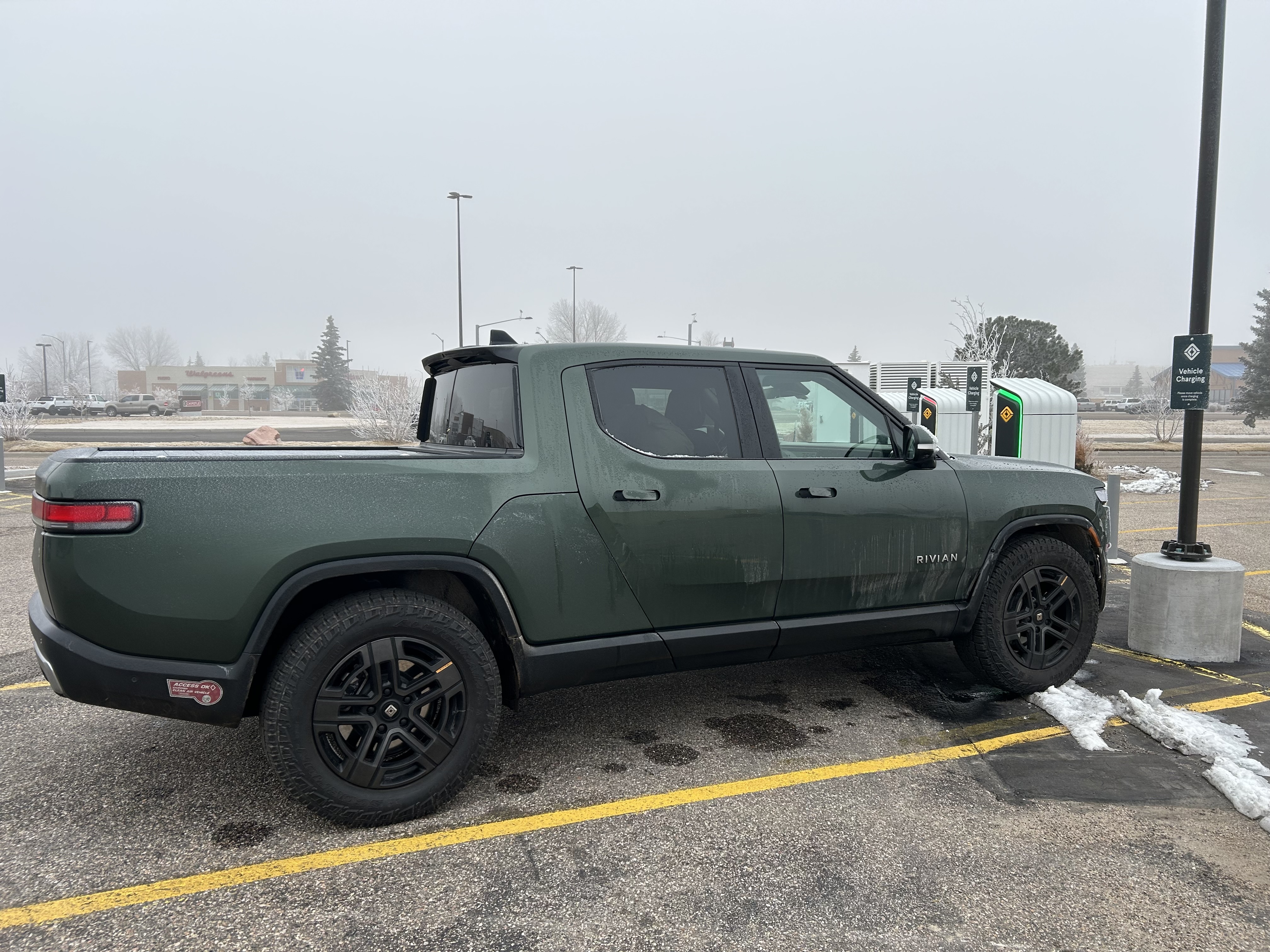
Planning
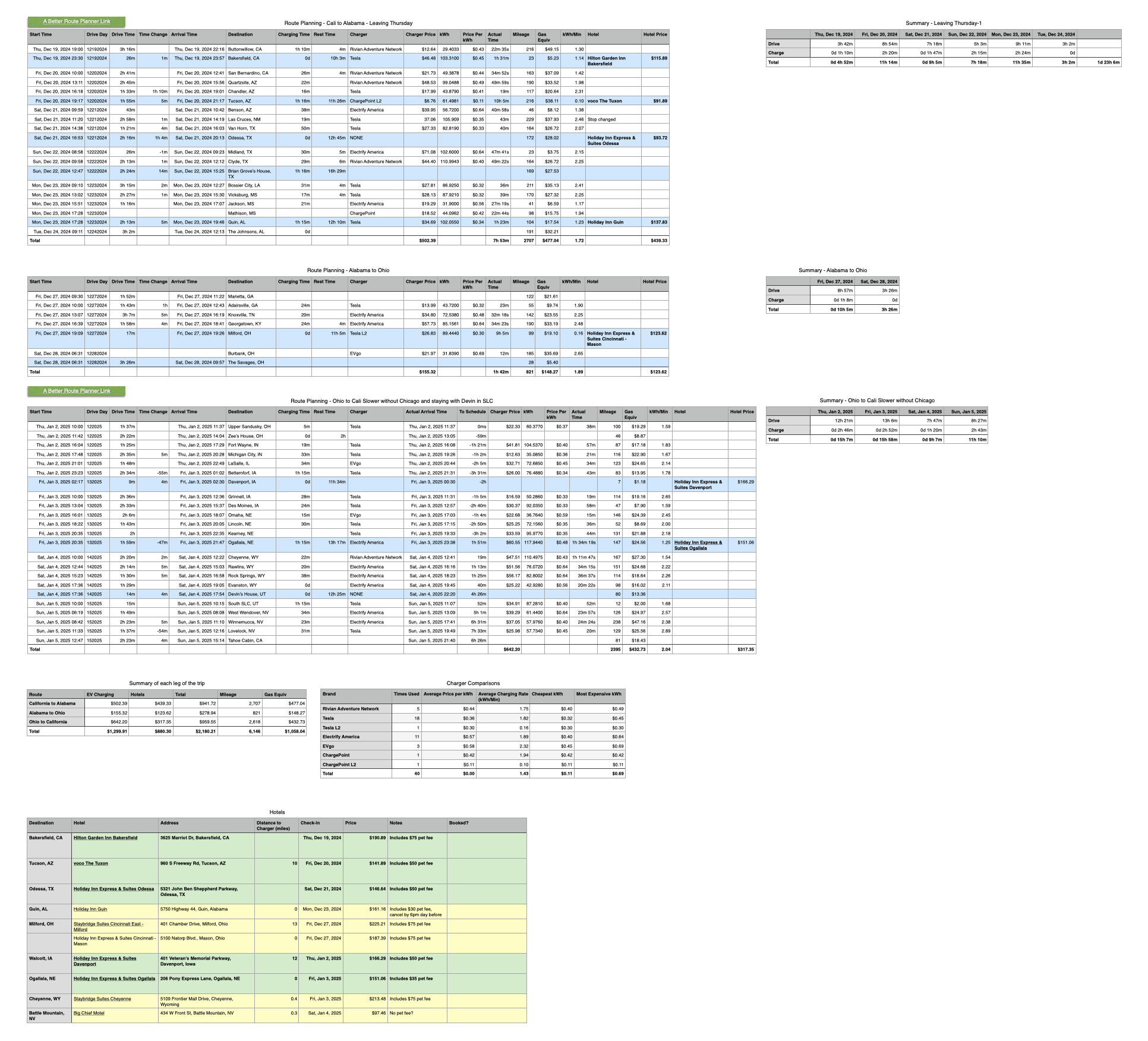
Myke being Myke, he made a spreadsheet of the entire route ahead of time to make sure it was feasible. He quickly discovered A Better Route Planner, which was actually owned by Rivian even though it works for all EVs. When you sign up for an account it pulls data from an API for your specific vehicle and driving style to give you more accurate estimates.
The route was definitely possible and there were numerous backup options for chargers along most of the route as well.
We planned out the route so we would be driving from roughly 10:00 (10am) to 20:00 (8pm) each day, with charging breaks where we’d get lunch and dinner. For the last charger for the night, I was typically able to find a nearby hotel that was either IHG or Hilton. Some of the hotels literally had chargers onsite in the parking lot, and sometimes they were a 5-10 minute walk. The fast chargers (Level 3) are great because you plug in and get settled in the hotel room for about 1.5 hours after which time the truck was fully charged. A couple hotels had slower Level 2 chargers (like we have at home) which take overnight. That’s also plenty convenient and it saves us from having to relocate.
Charging networks
We made a total of 40 charging stops across 5 different charging networks. Each one has their own account that you need to sign up for and their own app.
| Charging Network | Times Used | Avg Price per kWh | Avg Speed (kWh/min) | Cheapest kWh | Most Expensive kWh |
|---|---|---|---|---|---|
| Rivian Adventure Network | 5 | $0.44 | 1.75 | $0.40 | $0.49 |
| Tesla (L3) | 18 | $0.36 | 1.82 | $0.32 | $0.45 |
| Tesla (L2) | 1 | $0.30 | 0.16 | $0.30 | $0.30 |
| Electrify America | 11 | $0.57 | 1.89 | $0.40 | $0.64 |
| EVgo | 3 | $0.58 | 2.32 | $0.45 | $0.69 |
| ChargePoint (L3) | 1 | $0.42 | 1.94 | $0.42 | $0.42 |
| ChargePoint (L2) | 1 | $0.11 | 0.10 | $0.11 | $0.11 |
Tesla vs. Rivian Adventure Network
While the Rivian Adventure Network is easily my favorite, I am admittedly biased. At home, we consistently pay $0.36/kWh when charging in Sacramento, but I didn’t realize that different locations had different prices.
Tesla recently opened up their network to non-Tesla vehicles, and Rivian sent every car owner a free adapter to use. We got ours just in time and were eager to try it out. If you aren’t familiar, nearly every EV in the US uses one standard connector (J1772 for Level 2 and CCS for Level 3), but Tesla has their own proprietary connector. Their marketing department cleverly called this NACS or North America Charging Standard, even though they were the only ones using it until recently. Now, some EV manufacturers (including Rivian) are starting to move over to that connector. With our adapter, we have the best of both worlds since there is also a huge network of CCS chargers across the country that Tesla owners can’t use.
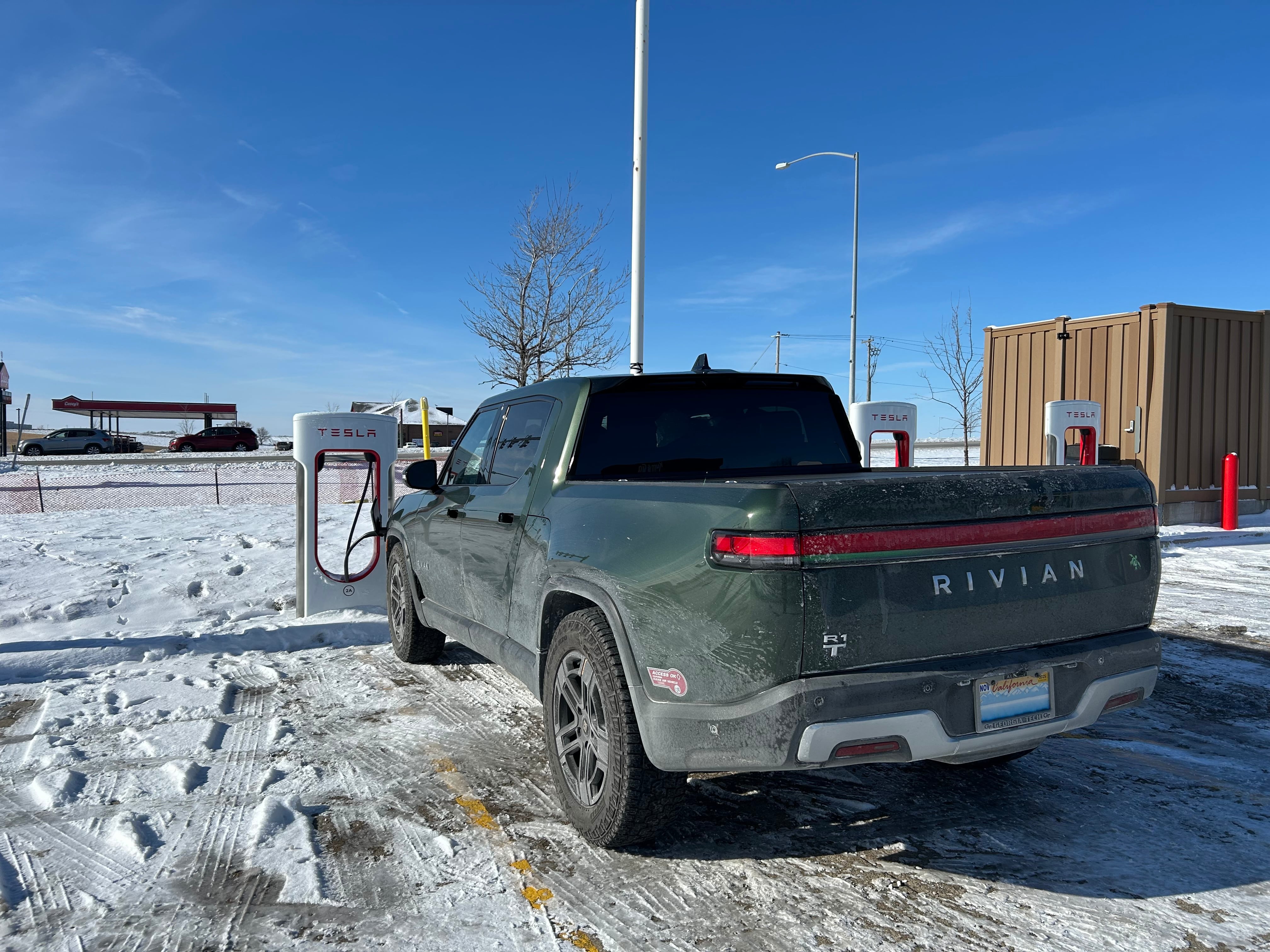
Tesla also has a “membership” program where you can pay $15/month to get discounted charging rates at “Tesla owner pricing,” but I couldn’t find anywhere official where that was published. Some people online were saying it was about a 10-20% discount, so I went ahead and signed up for this trip. We were routed to the Tesla network more than any other network and they were consistently cheaper. I’m not sure if the Rivian was taking the cost into account when it picked which charger to go to, but there were often exits with multiple charging networks where it would still pick the Tesla ones.
We even had a truck stop with both brand new Rivian Adventure Network chargers and Tesla chargers in the same parking lot. Even though the Tesla ones where cheaper there, I decided to stick with RAN. Rivian is also starting to open up their network to other EVs. The current network is only compatible with Rivian vehicles because when you plug-in, it just pairs with the vehicle and charges to your account on file. The newer chargers now have buttons on the screen and a credit card reader so that non-Rivian vehicles can pay per charge too. At that charging stop I helped a gentleman charge his Chevy Bolt for the first time and we spent a bit talking about how cool the Rivian is. It’s an interesting choice for Rivian to install chargers in the same parking lot as Tesla’s and charge more per kWh, but the user experience is still definitely better.
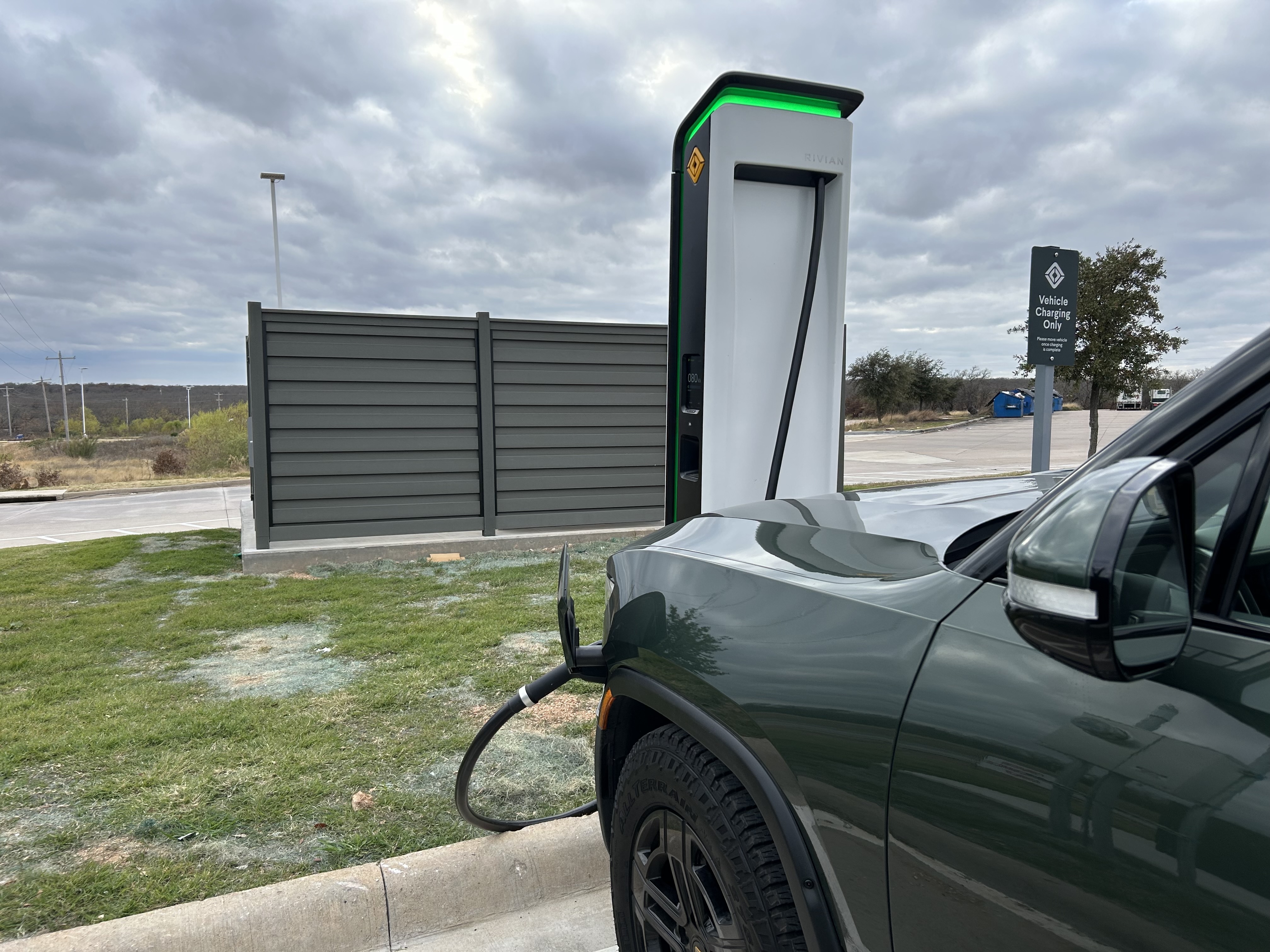
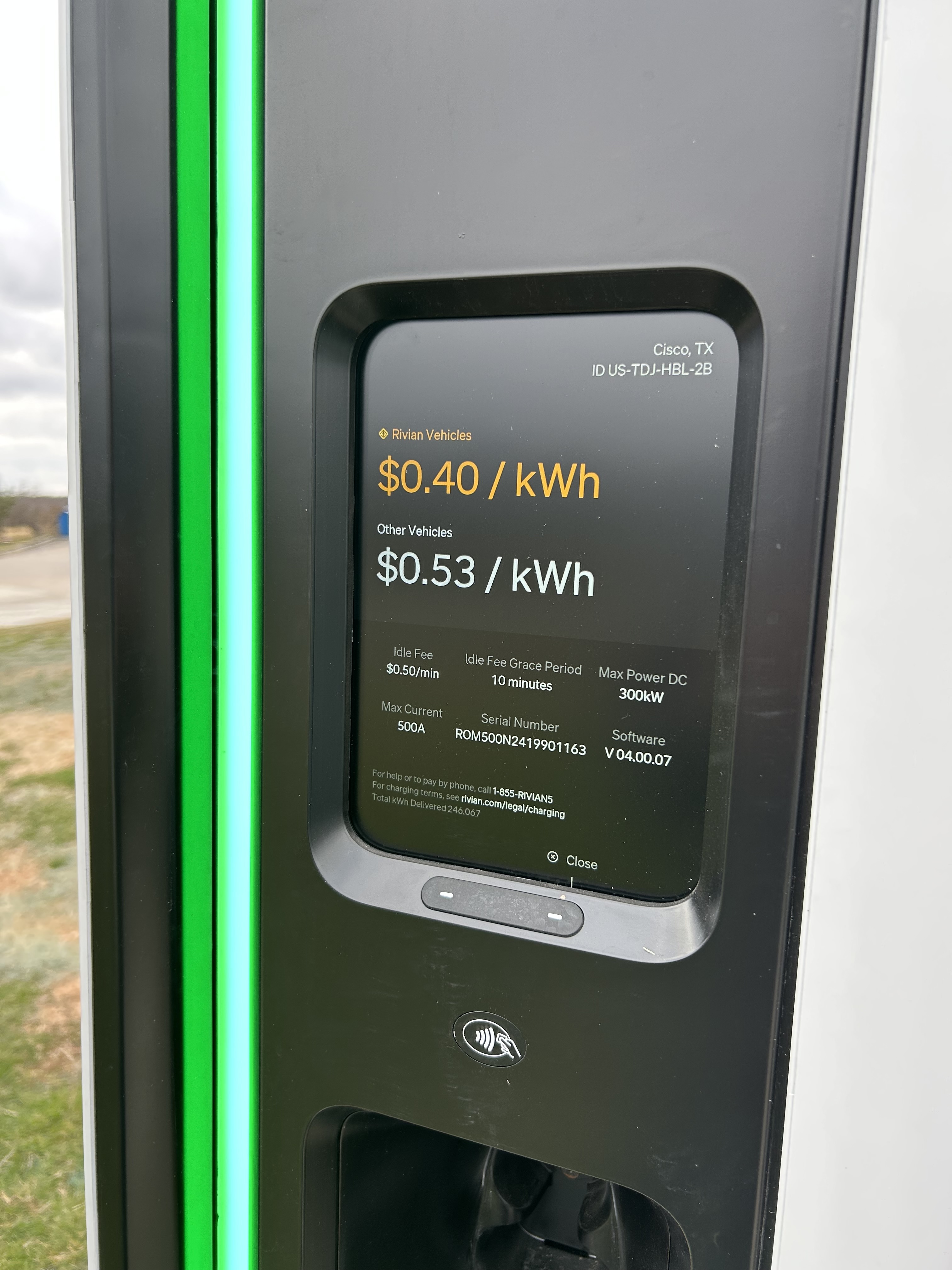
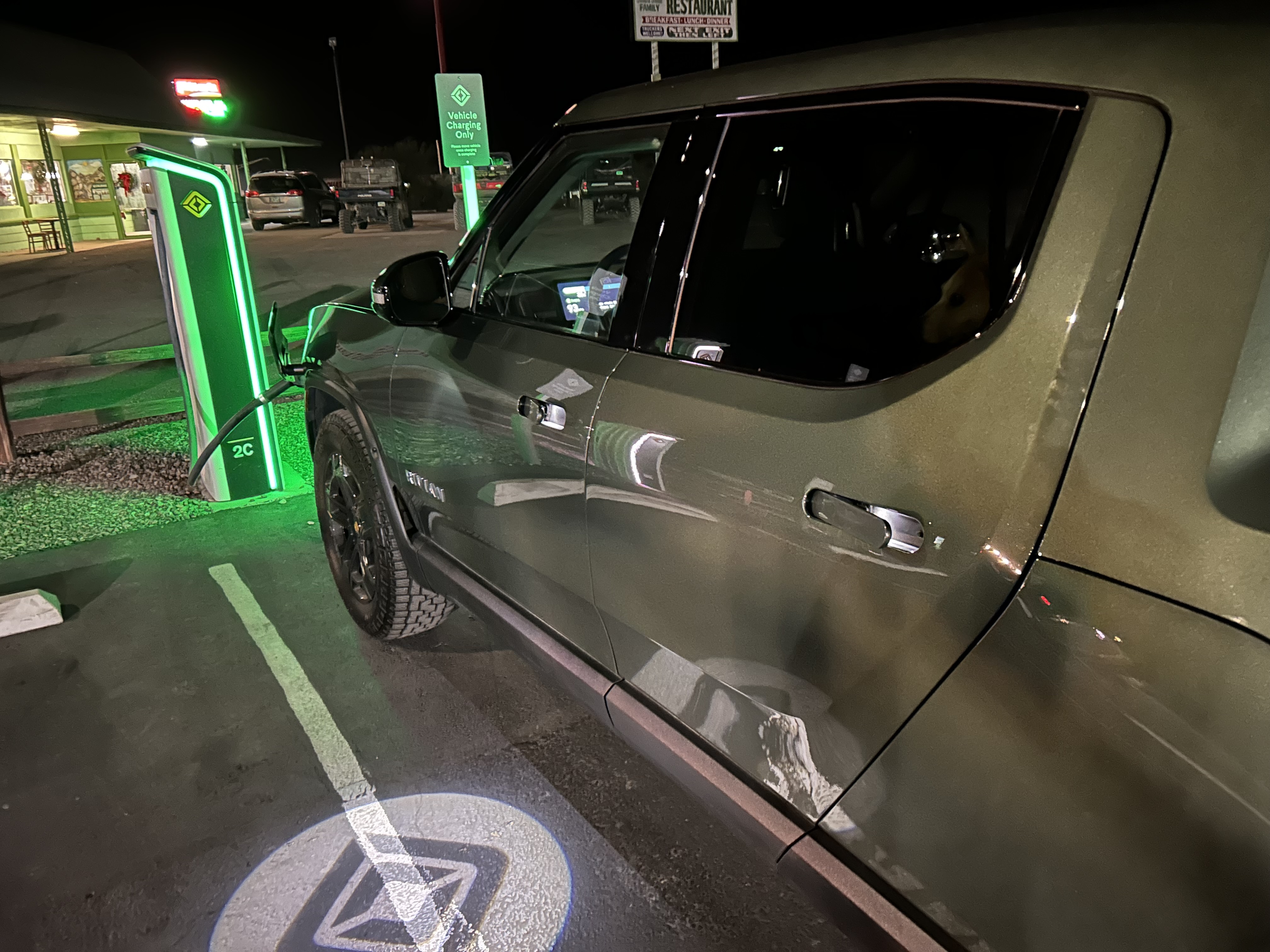
At other RAN chargers, we frequently get to say hi to other Rivian owners. This may be confirmation bias, but in my experience, Rivian owners tend to be more friendly and social. At the Tesla chargers, their owners immediately get back in their cars to watch TV. We also got numerous dirty looks from Tesla owners using their chargers, but that may also be because we had to take up two spots because their cords are so short. All Teslas have the charging port on the passenger rear and the Rivian R1T has it on the driver’s front, which I think is more convenient anyway.
We had one Tesla charger where we had to wait for 5 minutes. There was one charger available but because of the short cords, we either needed two available chargers side-by-side or needed to take the charger on the far right so we could overlap the space next to it. Fortunately that far right charger opened up and we were able to get in before we could even find another charger on the GPS.
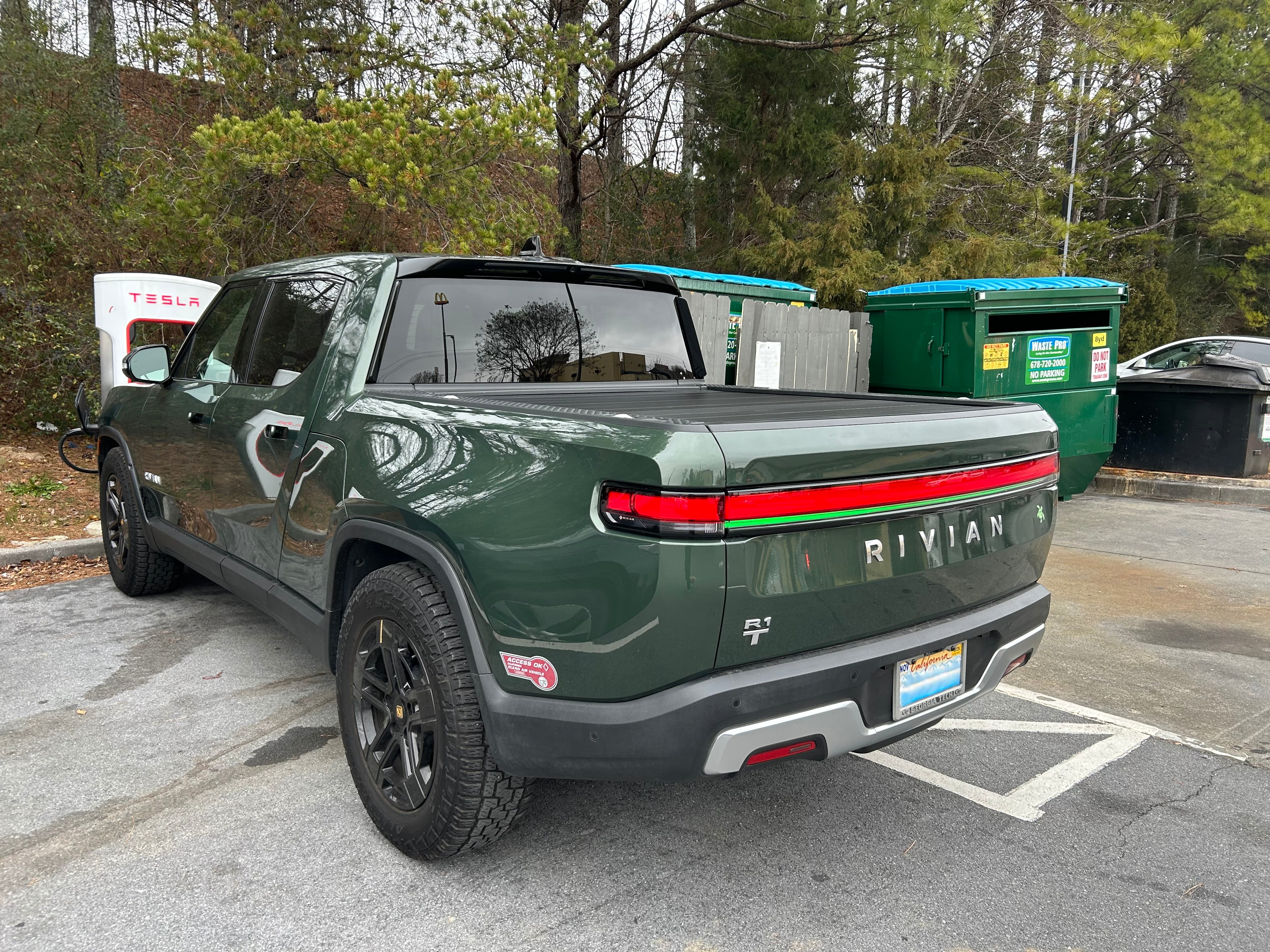
We had one charger on the Tesla network that just wouldn’t work for us. It was a Level 2 charger, and I didn’t realize until doing research later that those are not compatible with our adapter. There’s a different adapter that is built-in to some Tesla L2 chargers called a “Magic Dock” that does make it compatible. This charger, at one of the hotels, didn’t have this built-in adapter but another hotel across the street did. I thought the Magic Dock would be some awesome MagSafe-like adapter that magnetically clipped on to the bottom of a Tesla but there’s actually nothing magic about it… it just has a built-in adapter.
Electrify America and EVgo
The other popular networks are Electrify America and EVgo. At one point, there was an issue with Electrify America and Rivian trucks, so I generally steered away from them, but that issue appears to be resolved now and we didn’t have any problems.
Both EA and EVgo tend to be much more expensive than the alternatives, but sometimes they are the best chargers along the route, or are in more convenient locations like near restaurants or Walmarts. Some of the EA chargers had really bad scores in the app (they’re rated as A, B, C, D, or F based on past experience from Rivian users) but all of the ones we used were functional. Some EA chargers definitely went noticeably slower than others though, which led to those poor ratings. Many of the EA chargers also have LCD screens that are damaged or have been yellowed from the sun.
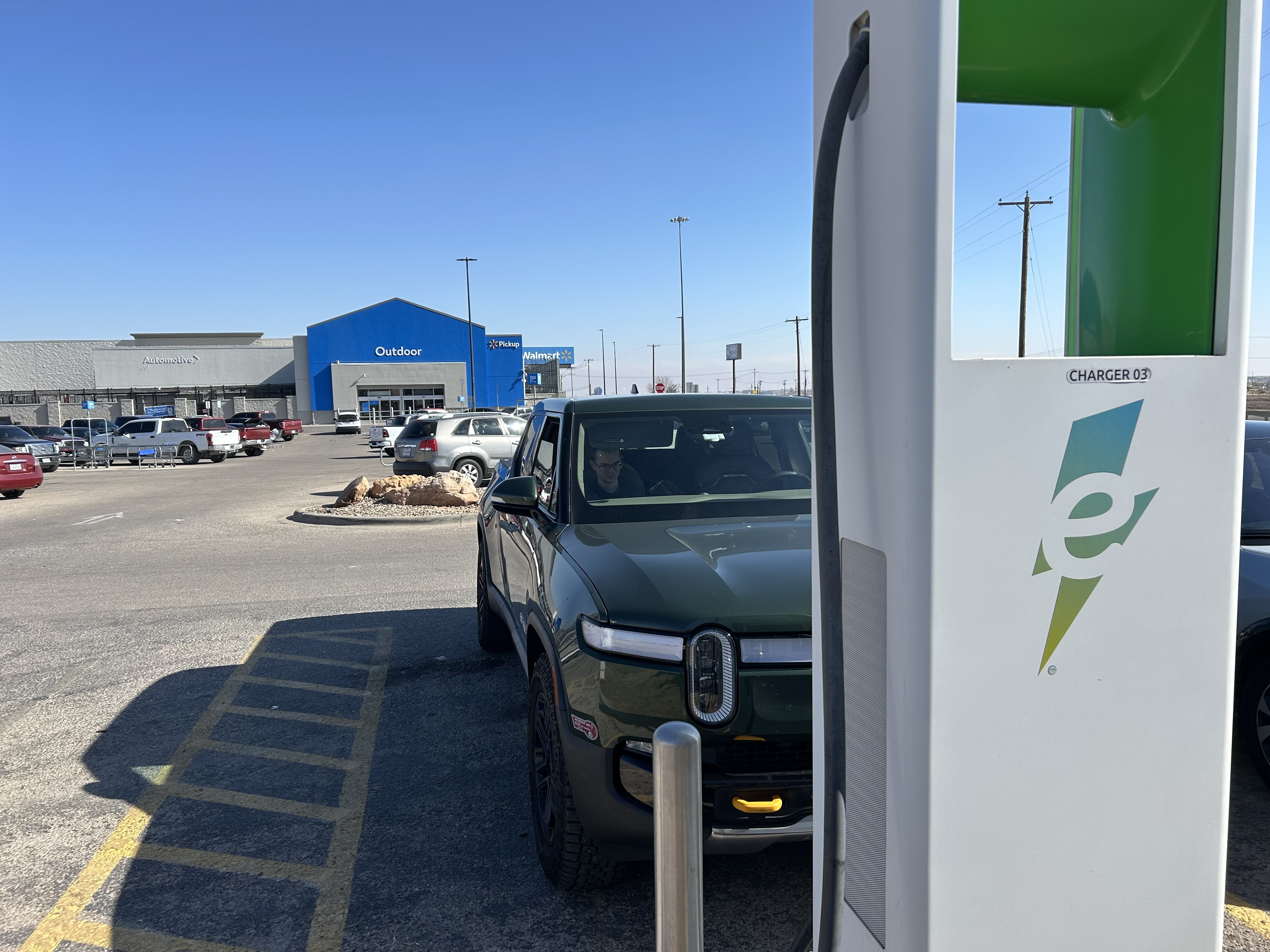
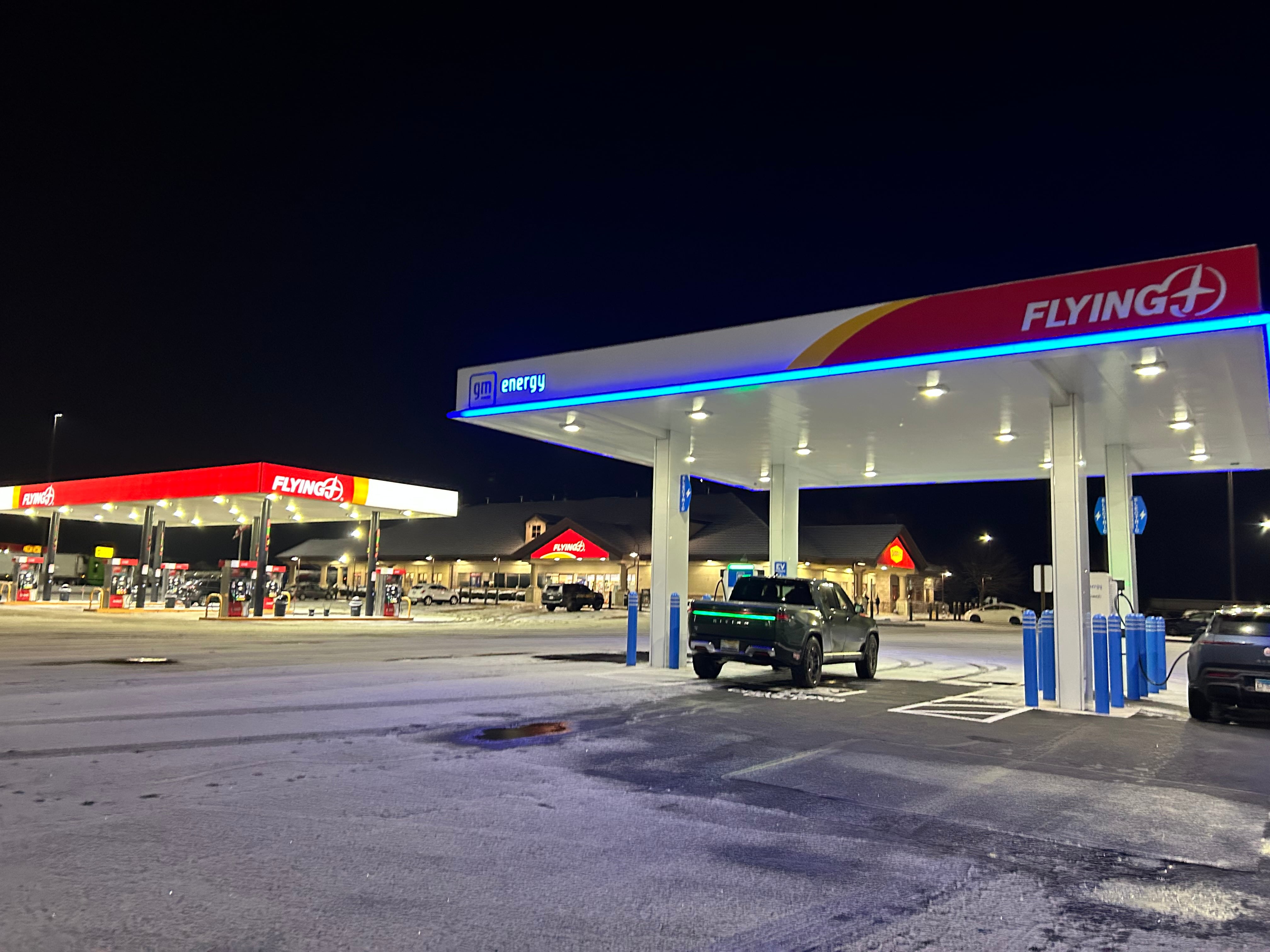
Of the expensive networks, EVgo is definitely nicer. We had one EVgo charger in La Salle, IL where it was under a covered awning and had windshield cleaner next to it. It was located at a Flying J truck stop which was also nice since there were restrooms and food nearby too.
The EV deserts of Mississippi and Alabama
The one place we had to change our route slightly off the ideal was in Alabama. We came across I-20 through Texas, Louisiana, and Mississippi. The most direct route to continue to Auburn, AL would have taken us across US-80 from Meridian, MS through Selma, AL. There were Tesla chargers in Meridian, but they were the old ones that weren’t compatible with other EVs. And then there was nothing along US-80… there was even only a single IHG hotel that was $300/night. We probably could have made it on the charge that we had, but it would have been cutting it close.
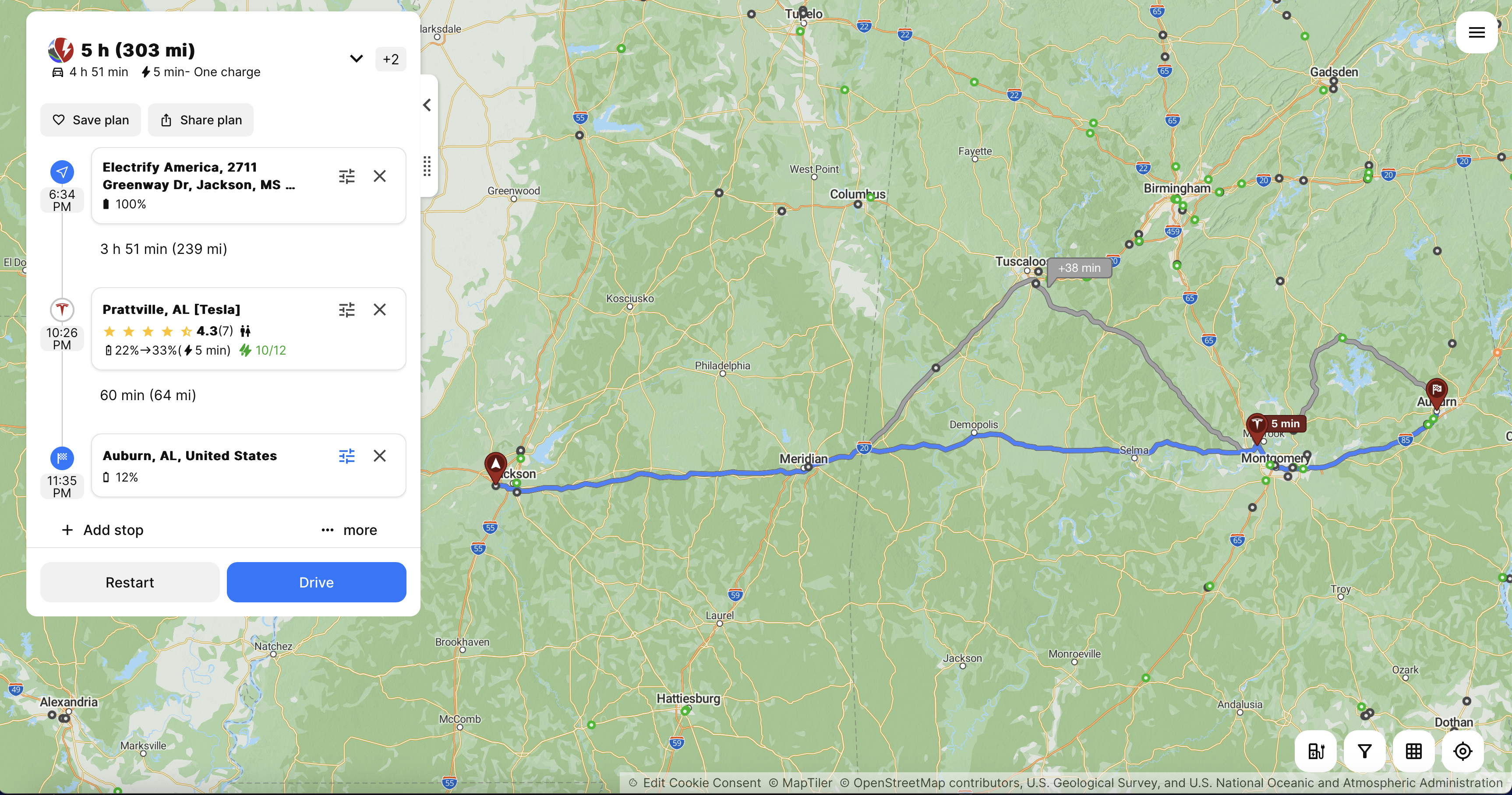
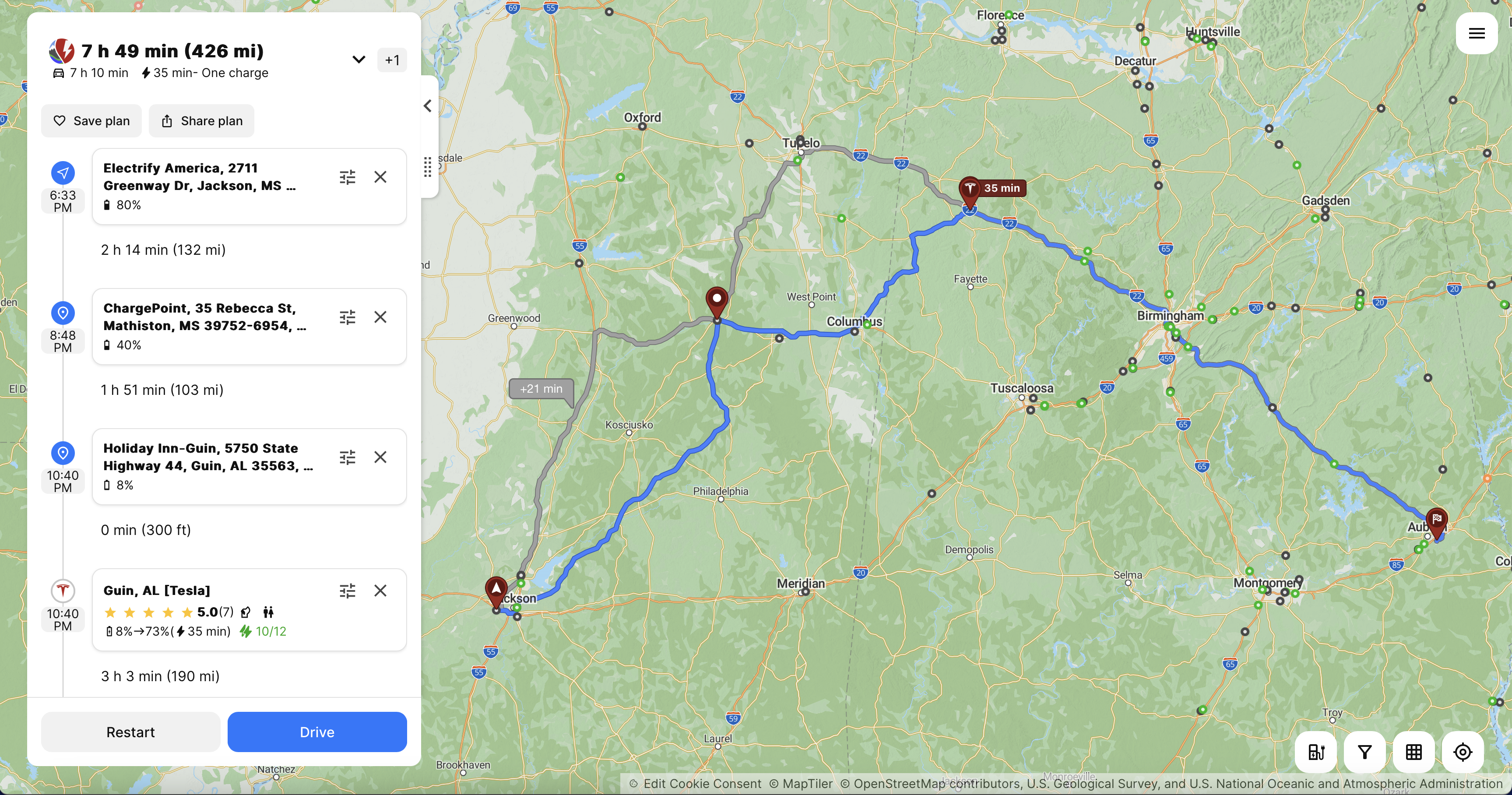
We decided to go a little out of the way, continuing on I-20 north through Tuscaloosa and the south side of Birmingham. The GPS said this would only add about 20 minutes to the trip, although it felt like much longer as there also weren’t really enough chargers along that route either. We wound up taking a handful of back country roads to a charger in the middle of nowhere just to have a little more confidence that we wouldn’t get stuck. In retrospect, we should have fully charged back in Jackson, MS and probably could have made it without a problem to Auburn, with a 5 minute stop in Montgomery, AL.
Looking at the route again now, it added more like 2 hours to the trip than 20 minutes.
Now we know for next time.
Summary and Totals
It’s definitely possible to road trip cross-country in an EV! We probably spent a little longer at charging stops than we would in a gas vehicle, and there still aren’t as many chargers as there are gas stations in the country. But with just a little planning ahead, it’s definitely possible.
| Route | EV Charging | Gas Equiv | Hotels | Total | Mileage |
|---|---|---|---|---|---|
| California to Alabama | $502.39 | $477.04 | $439.33 | $941.72 | 2,707 |
| Alabama to Ohio | $155.32 | $148.27 | $123.62 | $278.94 | 821 |
| Ohio to California | $642.20 | $432.73 | $317.35 | $959.55 | 2,618 |
| Total | $1,299.91 | $1,058.04 | $880.30 | $2,180.21 | 6,146 |
Note: The Total column is the amount we spent on EV charging plus hotels.
I also calculated out what the alternative cost would have been if we had a gas vehicle (such as our Porsche Cayenne Hybrid). That averages 25 mpg, although that includes city driving where it can stay on pure electric. so on highway driving it’s more like 21 mpg. I also looked up the average gas price in each state where we charged. Assuming that we actually got the average gas price where we stopped it would have been just a tiny bit cheaper to use gas.
Just like I used to shop around for gas prices though, I should have compared prices for the EV chargers and tried to avoid the expensive Electrify America and EVgo chargers as much as possible. EA also has a membership program that I could have signed up for which would have reduced their prices too, but I didn’t realize how many times we’d be stopping there. All in all, I bet I could have made the EV charging be cheaper than gas, although there’s also that benefit that it’s not polluting like EVs.
Related Links
- Collection: Roadtrip Diary
- Part 1: California to Alabama
- Part 2: Alabama to Ohio, and back to California
- Part 3: The Roadtrip in Numbers
- Photos: The Tuxon in Tucson